Project Overview
Client: IBM
Product: Watson Experience – Interactive AI Game
Industry: Enterprise AI / Events & Experiential Marketing
Role: Lead UI/UX Designer
Responsibilities: UI/UX design · System design · Design adaptation · Multilingual layouts · Event-oriented interfaces
Timeline: Multi-phase project (design, iteration, localization, deployment)
IBM wanted to present Watson Assistant at major international fairs and festivals through an interactive experience rather than traditional demos.
The solution was a custom-designed mini game that allowed visitors to directly experience how Watson assists users in problem-solving scenarios.
Challenge
1. Enterprise UI Meets Gaming
IBM’s Carbon Design System is built for serious enterprise products-not games.
The challenge was to respect IBM’s strict brand and UI standards while creating something playful, competitive, and engaging.
2. Multi-Screen Complexity
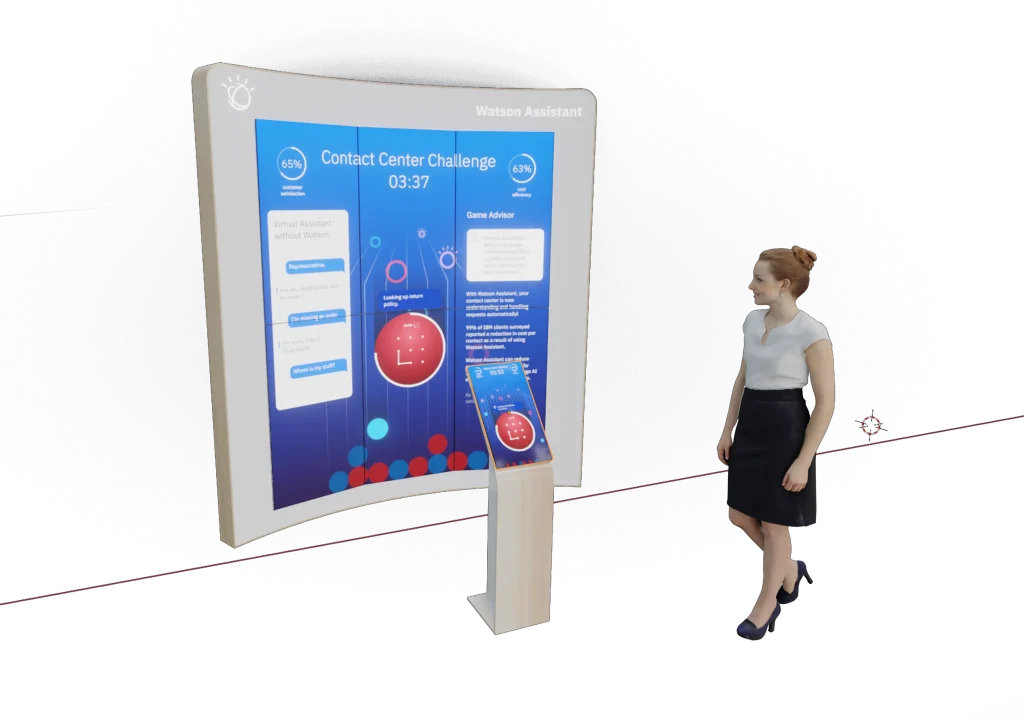
In large booth setups, content was distributed across 14 physically separated screens.
Key information could not appear at screen intersections or bezels.
3. Live Event Constraints
- Users had no onboarding time
- Gameplay had to be understood in seconds
- Visual hierarchy needed to work from both close (players) and far (audience) distances
Solution
How the design solved it
I designed a modular, system-driven UI that adapts across platforms and physical environments while maintaining a consistent visual language.
Key decisions:
- A shared visual core based on Carbon, extended for interactive use
- Clear separation between:
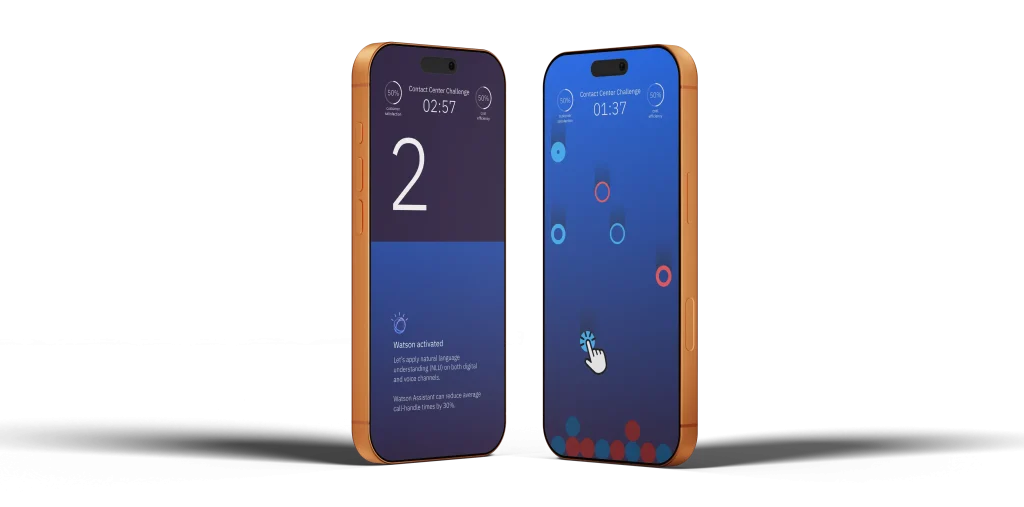
- Player UI (tablets)
- Audience UI (large screens)
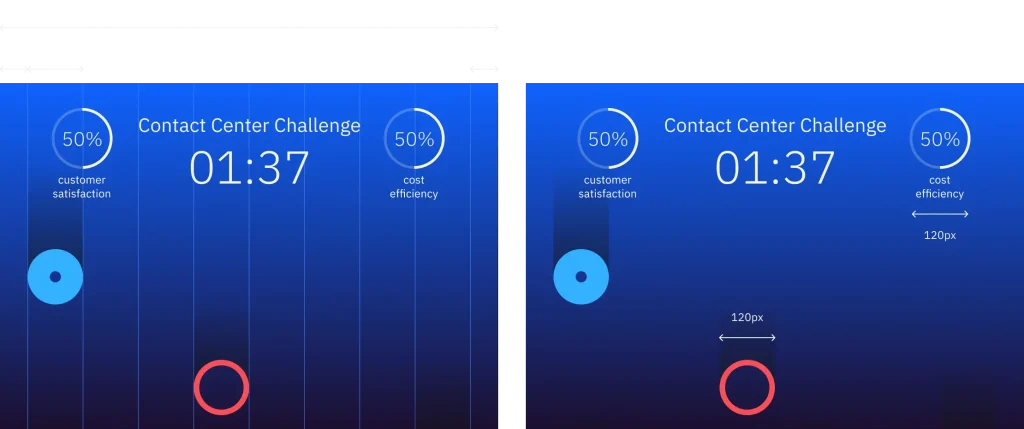
- Grid systems and safe zones that prevent critical data from crossing screen seams
- Progressive gameplay complexity to naturally introduce Watson’s value
Watson’s role evolved through gameplay – from optional assistant to core problem-solver – allowing users to experience the impact of AI rather than being told about it.
System & Experience Architecture
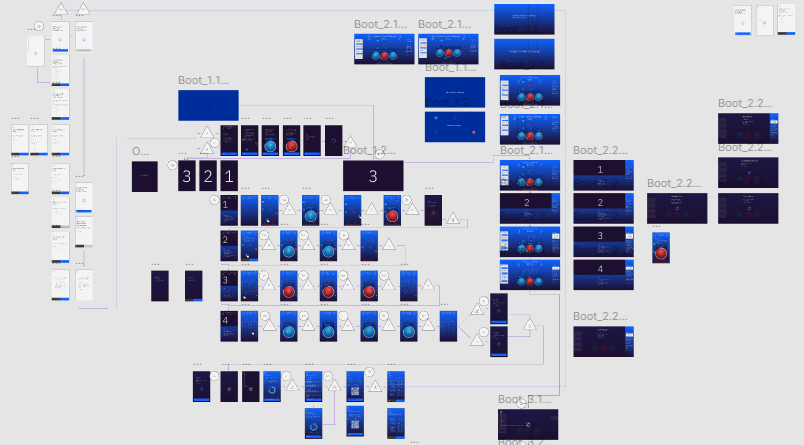
Before designing screens, the entire experience was mapped as a system:
Game phases:
- Setup & onboarding
- Countdown & start
- Gameplay levels (1–4)
- Results & performance analysis
- Leaderboard & replay
Modes:
- Single-player
- Multiplayer (up to 3 players)
Contexts:
- Player interaction
- Audience viewing
Layout Grid
Gameplay UX Design
(Levels & AI Logic)
The scoring system combined:
– Speed of resolution
– Speed of resolution
– Number of completed tasks
The game was structured into four progressive levels:
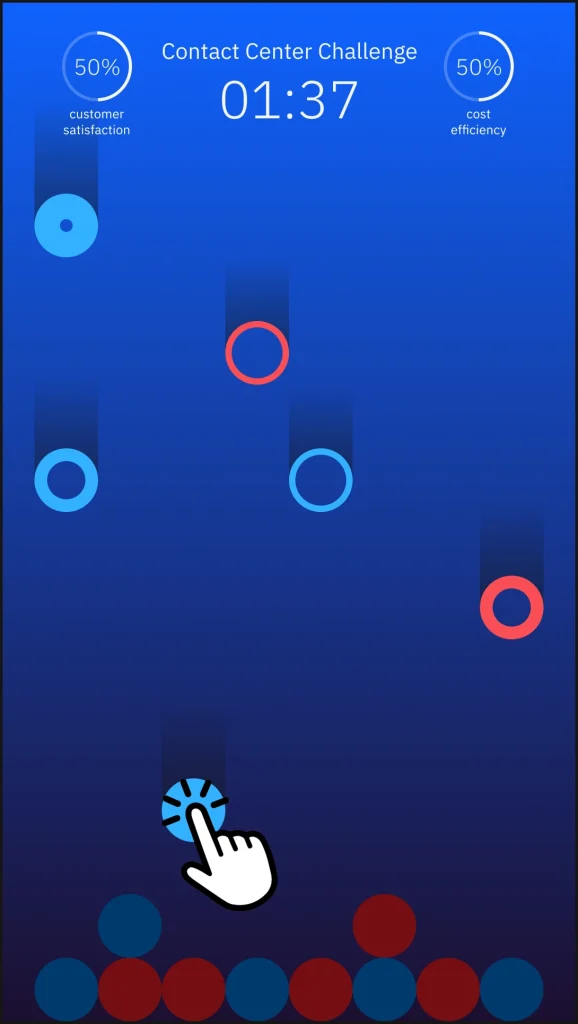
Level 1–2:
Player-driven task solving, basic challenges, optional AI assistance
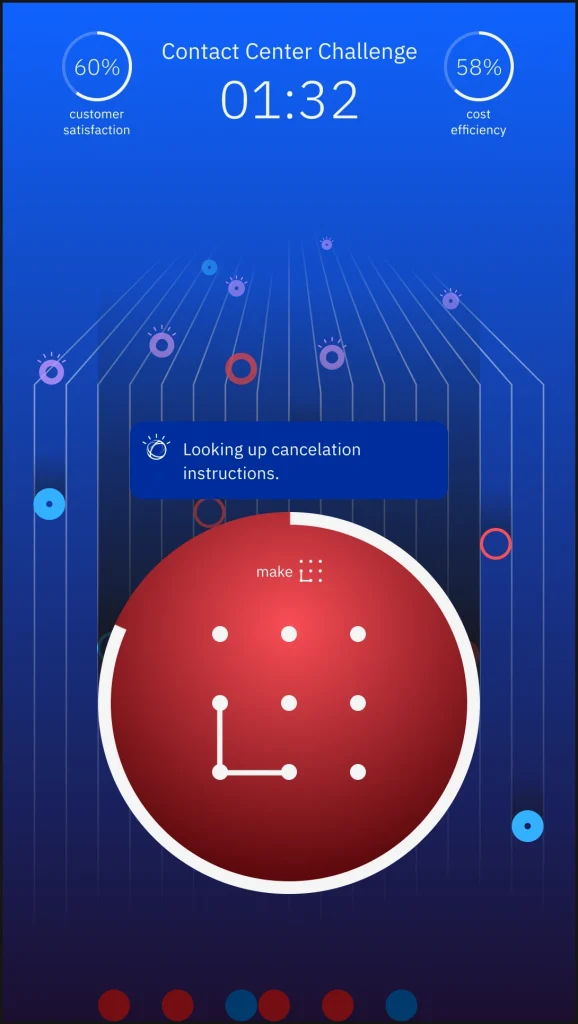
Level 3:
Increased density and speed, Watson begins auto-assisting to improve performance
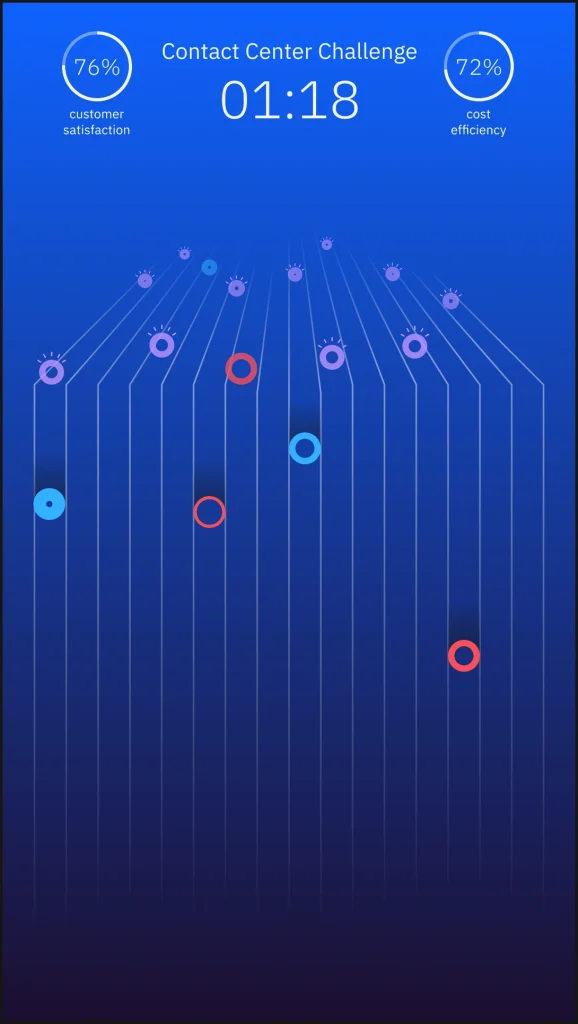
Level 4:
Watson fully intervenes, preventing task overload and maximizing efficiency
UI Screens Overview
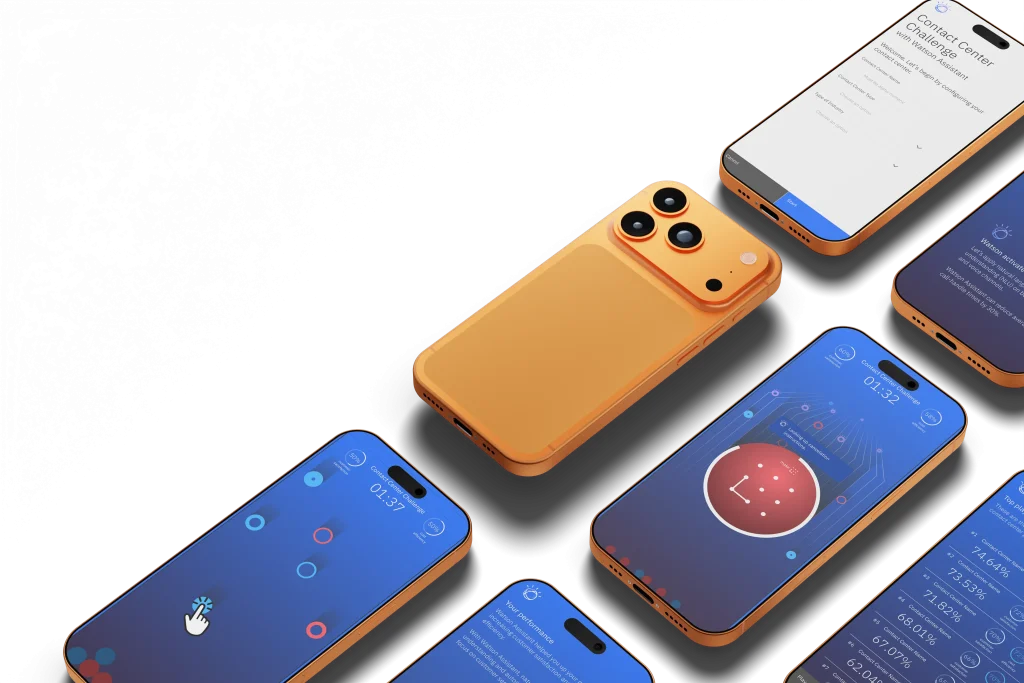
Key UI moments demonstrating how the interface adapts from player tablets to large-scale, multi-screen event environments.
Outcome
- Successfully deployed at multiple international IBM events
- High audience engagement and competitive participation
- Clear, experiential demonstration of Watson Assistant’s value
- Positive internal feedback for adapting Carbon Design System beyond its original use case
The project proved that enterprise AI products can be communicated through interactive, human-centered experiences without sacrificing brand integrity.